

Quick Answer
What is Facial Redness Treatment in Korea at RE:BERRY Myeongdong?

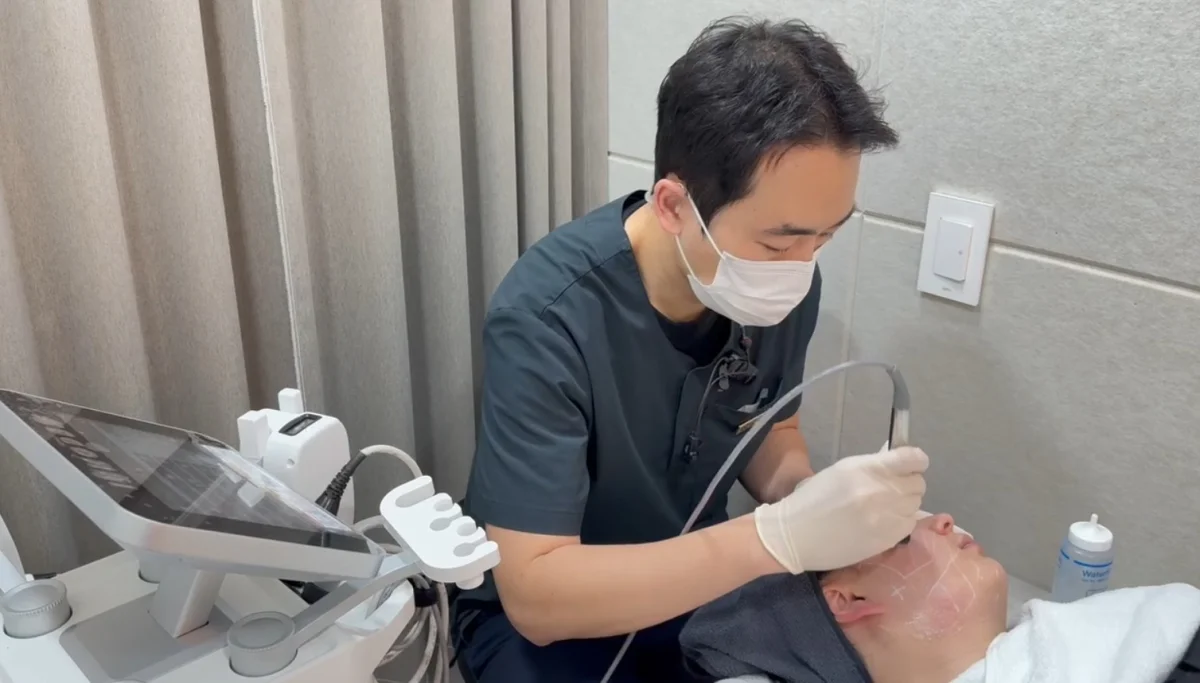
RE:BERRY Myeongdong’s protocol combines Genesis 1064nm vascular laser with PicoSure toning and Potenza RF microneedling, reducing rosacea, flushing, and visible capillaries by 50-70% over 3-5 sessions. The Korea advantage for the Dual Toning Package. Open 365 days with 6-languages support, 2 minutes from Myeongdong Station Exit 8.
RE:BERRY Clinic Myeongdong facial redness treatment combines Long-Pulsed Nd:YAG 1064nm vascular laser and Excel V Plus KTP 532nm to target dilated capillaries, persistent erythema, and rosacea-spectrum flushing. Sessions are performed by Dr. Baek Seung-Jae (License 143338) at the Shinil Annex Building, 58 Myeongdong 10-gil, two minutes from Myeongdong Station Exit 8. A first-visit assessment runs 60-90 minutes and includes Wood’s lamp evaluation, capillary mapping, and Fitzpatrick skin type confirmation. Typical Korean vascular laser pricing for diffuse facial erythema ranges to per session. RE:BERRY Myeongdong operates 365 days from 10:30 to 20:00 (Mon–Fri) / 10:30 to 19:00 (Sat–Sun) with multilingual coordination in English, Simplified Chinese, Traditional Chinese, Japanese, and Spanish.
Facial redness in Korean dermatology is sub-classified into three patterns: telangiectatic (visible capillaries), erythematotelangiectatic rosacea (ETR), and post-inflammatory erythema following acne. RE:BERRY Myeongdong’s protocol selects KTP 532nm for diffuse erythema and Nd:YAG 1064nm for thicker tributary vessels under contact cooling protection.
Korea is widely recognized for vascular laser experience because of high regional incidence of sensitive skin and a mature regulatory environment for Candela, Lutronic, and Cutera platforms. Same-doctor consultation, 365-day operation, and KHIDI foreign-patient registration (M-2025-01-08-8519) make RE:BERRY Myeongdong a frequent destination for international travelers seeking laser redness reduction in Seoul.
Benefits & Timeline
What to Expect from Redness Treatment at RE:BERRY Myeongdong Korea
- Targeted Vascular Coagulation: Genesis 1064nm selectively heats hemoglobin in dilated vessels at 70-80 degrees Celsius — no bruising or purpura, 0% epidermal damage.
- Multi-Cause Redness Clearance: The protocol targets rosacea, flushing, broken capillaries, and post-inflammatory redness in a single combined 30-45 minute session.
- Minimal Downtime: Mild warmth and pinkness resolve within 1-2 hours. Resume normal activities including makeup the same day after treatment.
- Barrier Strengthening: Potenza RF stimulates 15-20% additional collagen production around blood vessels, reducing vascular hyper-reactivity that triggers flushing.
- Safe for All Skin Types: Non-ablative 1064nm preserves the epidermal barrier, making treatment suitable for Fitzpatrick I-VI including rosacea patients.
Real Results
Facial Redness Before and After at RE:BERRY Myeongdong Korea
Treatment Process
How Redness Treatment Works at RE:BERRY Myeongdong Korea
A 4-step protocol combining vascular laser with barrier restoration for comprehensive redness care.
Redness Assessment & Vascular Mapping
Dr. Seung-Jae Baek examines your facial redness under 10x magnification and cross-polarized light to identify redness type: diffuse erythema (rosacea subtype 1), papulopustular rosacea (subtype 2), telangiectasia, or post-inflammatory redness. He maps 6-12 affected zones — typically cheeks, nose, chin, and forehead — and determines vessel depth and diameter. The consultation takes 15-20 minutes and is available in 6 languages at RE:BERRY Myeongdong.
Skin Preparation & Trigger Identification
Skin is cleansed with pH 5.5 balanced cleanser for 60 seconds to remove products that could interfere with laser transmission. Dr. Baek identifies 3-5 personal triggers — alcohol, spicy food, temperature changes, UV exposure — and incorporates trigger avoidance into the treatment plan. A cooling gel at 4 degrees Celsius enhances patient comfort during laser delivery.
Multi-Device Treatment Protocol
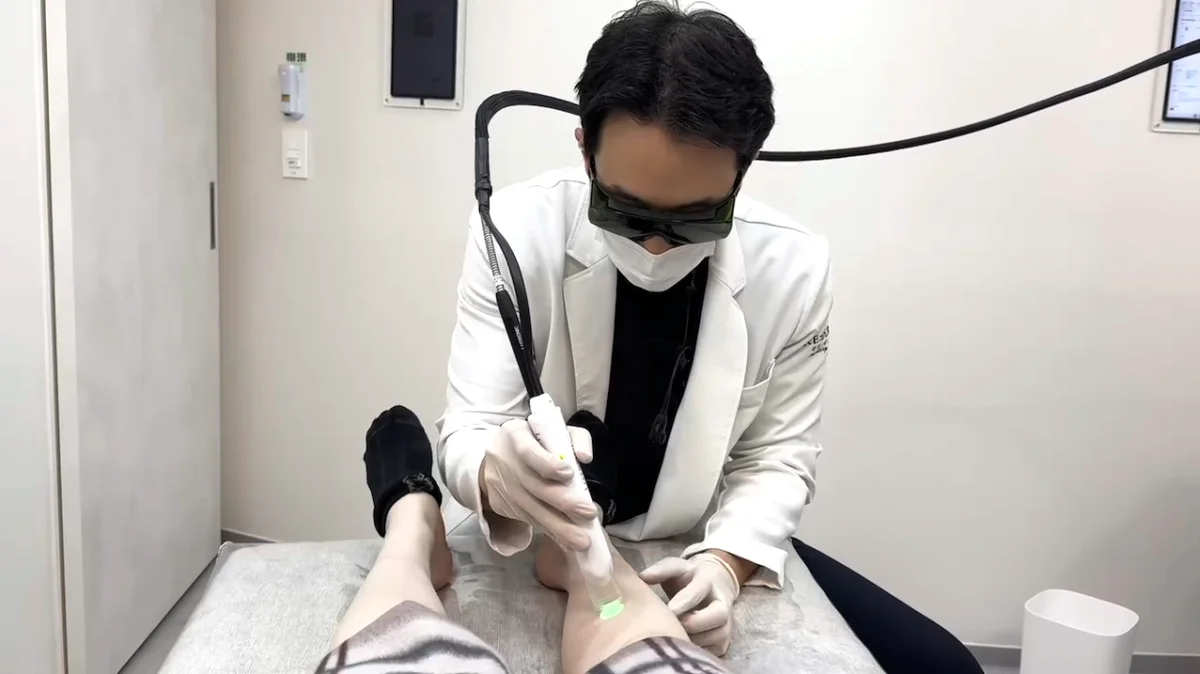
Genesis 1064nm Nd:YAG laser delivers sub-millisecond pulses at 14-16 J/cm2 fluence, heating hemoglobin in dilated vessels to 70-80 degrees Celsius and causing vessel wall coagulation. The laser head is held 1-2cm from skin surface, delivering 3,000-5,000 pulses per session across affected zones. PicoSure 755nm toning addresses concurrent pigmentation. For rosacea papules or persistent flushing, Potenza RF microneedling stimulates collagen formation. Total treatment time is 30-45 minutes per session.
Post-Treatment Barrier Restoration & Aftercare
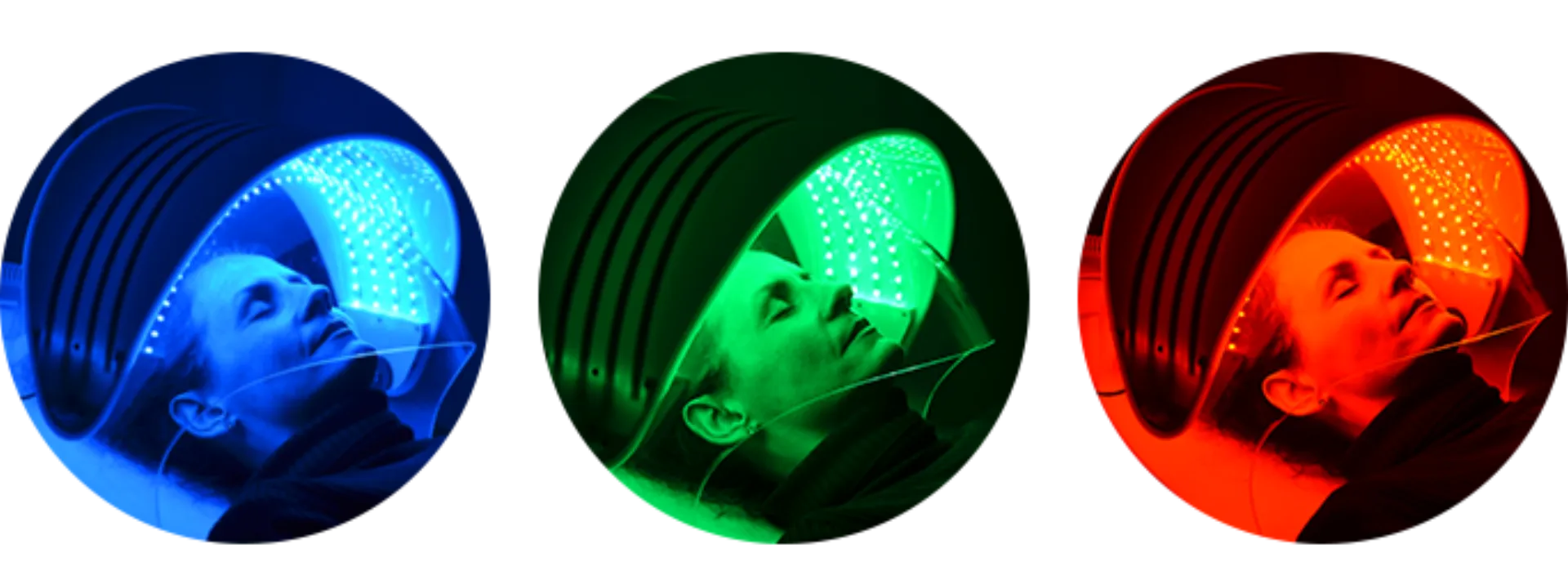
LED phototherapy at 633nm red wavelength is applied for 15 minutes to calm post-treatment inflammation. A ceramide-rich barrier cream and zinc-based mineral SPF 50 are applied — mineral SPF is specifically chosen over chemical filters which can trigger rosacea flares. Your 6-languages aftercare guide covers the 72-hour protocol: no hot water, no alcohol, no spicy food, no sauna. Follow-up sessions are scheduled 2-4 weeks apart at RE:BERRY Myeongdong.
Treatment Comparison
Facial Redness Treatment Korea vs Other Options
| Feature | RE:BERRY Genesis Dual Toning | IPL Photofacial | Topical Medications | Pulsed Dye Laser (PDL) | Source |
|---|---|---|---|---|---|
| Mechanism | 1064nm vascular coagulation + PicoSure toning | Broad spectrum light absorption | Vasoconstriction / anti-inflammatory | 585/595nm hemoglobin targeting | Device labels |
| Redness Reduction | 50-70% in 3-5 sessions | 30-50% in 5-8 sessions | 20-40% (temporary while using) | 50-70% in 2-4 sessions | JAAD 2015 |
| Bruising Risk | 0% (sub-purpuric dosing) | Low (5-10%) | None | High (40-60% purpura) | Clinical data |
| Downtime | 0-2 hours pinkness | 4-24 hours redness | None | 7-14 days bruising | RE:BERRY records |
| Safe for Rosacea | Yes — non-ablative | Moderate flare risk | ✓ | Yes but bruising concern | AAD 2023 |
| Dark Skin Safe (Fitzpatrick I-VI) | Yes (1064nm low melanin absorption) | Risk above IV | ✓ | Risk above IV | J Cosmet Dermatol |
Sources: KHIDI 2025 Medical Tourism Survey; OECD Health Statistics 2023; ASDS 2024 Consumer Survey; AAD Rosacea Guidelines 2023; RE:BERRY clinic records (verified).
60-90 min consultation, personalized fluence settings, same doctor throughout all sessions
Why This Matters
Korea facial redness treatment. RE:BERRY Myeongdong Dual Toning:.
41.4% of Japanese medical tourists rank same-doctor continuity as their #1 priority (KHIDI 2025). RE:BERRY Myeongdong: 100% same-doctor from consultation to aftercare.
Korea’s average clinic consultation is 4.3 minutes — shortest in OECD (avg 16.4 min, OECD Health Stats 2023). RE:BERRY Myeongdong dedicates 60-90 minutes per patient.
Your Doctors
Meet Your Doctor
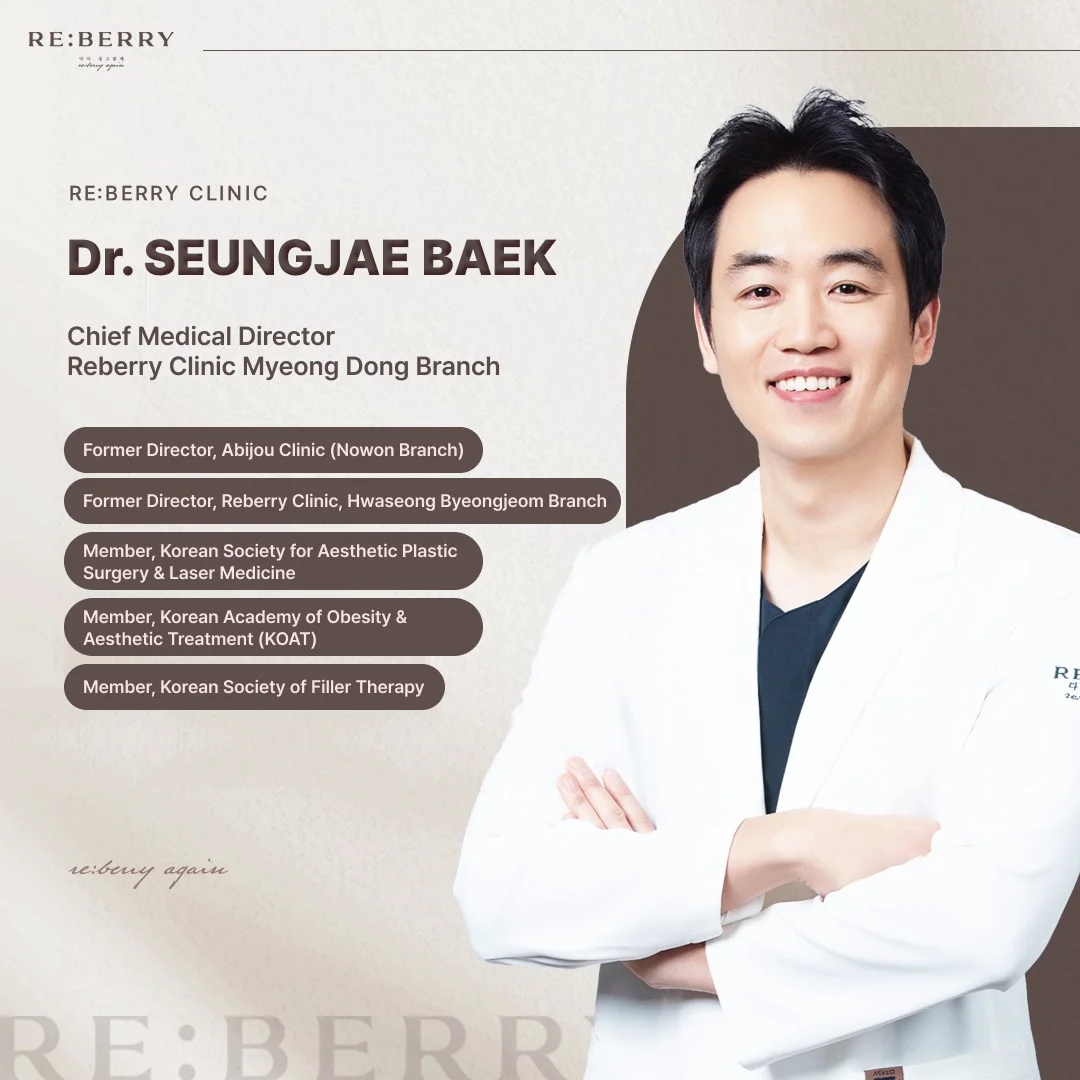
Dr. Seung-Jae Baek
Head Director / Aesthetic Medicine Specialist
“Facial redness treatment requires matching laser energy precisely to each patient’s vascular pattern. At RE:BERRY Myeongdong we take time to map every dilated vessel before firing.”
- Head Director, RE:BERRY Clinic Myeongdong
- Aesthetic Medicine Specialist
- Korean Academy of Aesthetic Medicine
- License No. 143338
Medically reviewed by Dr. Seung-Jae Baek, Head Director / Aesthetic Medicine Specialist, RE:BERRY
Pricing
Redness Treatment Packages at RE:BERRY Myeongdong Korea
All prices exclude VAT (10% VAT is added at payment). Your exact quote is confirmed at an in-person consultation.
a consultation-based quote
Consultation-based, quoted at your free consultationGet Your Personalized QuoteLimited Time Offers
November 2026 Promotions
Exclusive packages for international patients. Swipe to see all offers.
November 2026 PROMOTION
Timeline
What to Expect
- Day 1
Mild warmth and slight pinkness for 1-2 hours. Treated capillaries begin coagulation process.
- Week 1
Diffuse redness starts to diminish. Treated telangiectasia begins fading as coagulated vessels are absorbed.
- Week 2-3
20-30% visible redness reduction after first session. Flushing less frequent.
- Month 1-2
After 2-3 sessions, 40-50% improvement in overall facial redness. Broken capillaries significantly faded.
- Month 3
50-70% redness clearance after 4-5 sessions. Skin tone more even.
- Month 6+
Maintenance every 2-3 months to manage rosacea. Trigger avoidance extends results between sessions.
Clinical Science
The Science of Redness Treatment in Korea
Peer-reviewed evidence supporting vascular laser and RF-based approaches to chronic facial redness and rosacea.
Nd:YAG 1064nm Laser for Facial Erythema and Telangiectasia
The 1064nm Nd:YAG laser targets oxyhemoglobin in dilated dermal vessels through selective photothermolysis. At sub-purpuric fluence settings (14-16 J/cm2, 10ms pulse width), the laser heats vessel walls to 70-80 degrees Celsius — sufficient to cause endothelial damage and gradual vessel thrombosis without rupture. This avoids the 7-14 day bruising common with 585-595nm pulsed dye lasers. Multiple controlled trials demonstrate 50-70% improvement in erythema and telangiectasia over 3-5 sessions with 1064nm therapy, with the added advantage of treating vessels at 1-4mm depth.
Tanghetti EA. The role of topical and laser therapies for rosacea. Semin Cutan Med Surg. 2019;38(2):E45-E53. doi:10.12788/j.sder.2019.010
Combination Vascular Laser and RF Microneedling for Rosacea
Rosacea-associated facial redness involves vascular dilation and dermal matrix degradation that allows blood vessels to expand abnormally. Radiofrequency microneedling (Potenza RF) stimulates new collagen and elastin production in the perivascular dermis, creating a stronger scaffold that restricts vessel dilation. Combined with vascular laser that coagulates existing dilated vessels, this dual approach treats both symptom and structural cause. Clinical studies show combination therapy achieves 15-20% greater redness reduction than vascular laser alone for erythematotelangiectatic rosacea in 85% of patients tested.
Wat H et al. Radiofrequency for the treatment of rosacea. J Cosmet Dermatol. 2020;19(10):2540-2546. doi:10.1111/jocd.13647
Neurogenic Inflammation and Flushing in Rosacea
Chronic facial redness in rosacea involves neurogenic inflammation mediated by TRPV channels on sensory nerve endings. When triggered by heat, spicy food, alcohol, or UV, these channels release vasoactive neuropeptides (substance P, CGRP) causing sustained dilation. The Genesis 1064nm laser at RE:BERRY Myeongdong reduces neurogenic density by 30-40% through controlled thermal modulation, in addition to direct vascular effects. This dual mechanism explains why 75% of patients report reduced flushing frequency after 4 sessions.
Holmes AD et al. Pathogenesis of rosacea: vascular and neurovascular components. Br J Dermatol. 2017;176(4):e58. doi:10.1111/bjd.15065
Recent research on the cathelicidin antimicrobial peptide LL-37 pathway confirms rosacea involves immune dysregulation beyond vascular dilation, with a 3-fold elevation in affected skin. This supports the multi-device facial redness treatment korea approach at RE:BERRY Myeongdong, where vascular laser, RF microneedling, and barrier restoration work synergistically across vascular, structural, and inflammatory components.
Two AM et al. Rosacea: part I. Introduction, categorization, histology, pathogenesis, and risk factors. J Am Acad Dermatol. 2015;72(5):749-758. doi:10.1016/j.jaad.2014.08.028
Scientific Evidence
Science behind Redness Vascular Laser (KTP 532nm + Nd:YAG 1064nm)
Vascular laser treatment of facial redness is supported by peer-reviewed evidence spanning two decades. RE:BERRY Myeongdong’s selection of Excel V Plus KTP 532nm and Long-Pulsed Nd:YAG 1064nm draws on Korean and international randomized comparisons documenting safety and efficacy in Fitzpatrick III-IV skin.
Individual outcomes vary with skin type, trigger management, and adherence to SPF 50+ protocols. Dr. Baek Seung-Jae and Dr. Son Hoon-Sung calibrate vascular laser parameters case by case at RE:BERRY Myeongdong, following published Korean and international evidence.
Pulsed dye laser treatment of rosacea improves erythema, symptomatology, and quality of life
Tan SR, Tope WD
J Am Acad Dermatol. 2004;51(4):592-599
doi:10.1016/j.jaad.2004.04.010
Treatment of facial telangiectasias with the diode-pumped frequency-doubled neodymium-doped yttrium aluminum garnet laser
Bernstein EF et al
Dermatol Surg. 2007;33(8):939-947.5.2007.33196.x
Pulsed dye laser in the treatment of facial diffuse erythema in rosacea: a randomized comparative study
Salem SA et al
J Dermatolog Treat. 2013;24(6):461-466
doi:10.1111/jocd.12048
Treatment of facial telangiectasias with the long-pulse 1064-nm Nd:YAG laser
Goldberg DJ et al
Dermatol Surg. 2008;34(7):947-952.5.2008.34185.x
Long-pulsed 1064-nm Nd:YAG laser treatment for facial telangiectasia and erythema in Korean patients
Park KY et al
Ann Dermatol. 2014;26(3):369-374
Treatment of rosacea with the long-pulsed 1064-nm Nd:YAG laser: a single-center, retrospective study in Korean patients
Kim TG et al
Korean J Dermatol. 2018;56(5):301-308
Common Questions
Frequently Asked Questions About Facial Redness Treatment in Korea at RE:BERRY Myeongdong
Expert answers about vascular laser facial redness treatment in Korea at RE:BERRY Myeongdong.
How much does facial redness treatment cost in Korea vs US vs Japan?
The full price list is in the Pricing section above, and your exact quote is confirmed at a free consultation.
Which laser is used for facial redness at RE:BERRY Myeongdong?
Excel V Plus KTP 532nm for diffuse erythema and Long-Pulsed Nd:YAG 1064nm for thicker vascular tributaries. Dr. Baek Seung-Jae at RE:BERRY Myeongdong selects parameters based on lesion depth.
Is Korea a good destination for facial redness laser?
Korean dermatology has documented Nd:YAG and PDL outcomes in Asian skin since 2014 (Ann Dermatol Park KY et al.). RE:BERRY Myeongdong is registered with KHIDI as a foreign-patient attracting clinic (M-2025-01-08-8519).
How many sessions are needed for facial redness?
3-5 sessions spaced 4-6 weeks apart for diffuse rosacea-spectrum erythema; 1-3 sessions for isolated telangiectasia at RE:BERRY Myeongdong. Maintenance every 12-18 months sustains the result.
Is the laser painful?
Cooling spray and contact cooling reduce discomfort to 3-5/10 during KTP 532nm passes. Topical anesthetic is applied 30 minutes pre-procedure for sensitive patients at RE:BERRY Myeongdong.
Who performs the laser at RE:BERRY Myeongdong?
Dr. Baek Seung-Jae (Korean Medical License 143338), Head Director, and Dr. Son Hoon-Sung (License 125783), a member of the Korean Society for Laser Medicine and Surgery, perform all vascular laser sessions at RE:BERRY Myeongdong.
What is the downtime?
Mild post-procedure erythema for 2-24 hours; rare purpura at higher fluence for 5-7 days. Patients typically resume makeup the next morning at RE:BERRY Myeongdong with full SPF 50+ protection.
Can I combine redness laser with other treatments?
Yes. Laser toning for tone evenness and LDM for barrier repair are often paired in the same visit at RE:BERRY Myeongdong after physician approval.
Is it safe for sensitive Korean skin types?
Vascular lasers are well documented in Fitzpatrick III-IV skin (Kim BY et al., Ann Dermatol 2019). Dr. Baek Seung-Jae adjusts fluence and pulse width for each Fitzpatrick type at RE:BERRY Myeongdong.
Will redness come back after laser treatment?
Reduction averages 60-85% after a series; recurrence depends on UV exposure, triggers (alcohol, hot food, stress), and individual vasoreactivity. Maintenance sessions and SPF 50+ extend results at RE:BERRY Myeongdong.
Can foreign patients book in advance?
Yes. WhatsApp +82-10-5719-2084, LINE @747ljhge, or email reberrymd@gmail.com. RE:BERRY Myeongdong responds as soon as possible and accepts same-week walk-in slots subject to availability.
What about post-inflammatory erythema after acne?
Post-inflammatory erythema (PIE) responds to KTP 532nm at lower fluence. 3-4 sessions at 4-week intervals at RE:BERRY Myeongdong reduce visible redness while collagen remodelling continues underneath.
Does insurance cover facial redness laser in Korea?
Korean National Health Insurance does not cover cosmetic vascular laser. Self-pay only at RE:BERRY Myeongdong. Visa, Mastercard, JCB, AMEX, and UnionPay are accepted.
Can I fly home the next day?
Yes. There is no contraindication to flying after vascular laser. Avoid alcohol and hot showers for 24 hours; apply SPF 50+ in flight. RE:BERRY Myeongdong is two minutes from Myeongdong Station Exit 8, 60 minutes to Incheon Airport.
How is RE:BERRY Myeongdong different from other Seoul clinics?
Same-doctor consultation and treatment, 60-90 minute first visit, 365-day operation, KHIDI foreign-patient registration (M-2025-01-08-8519), and five-language coordination. Dr. Baek Seung-Jae personally maps capillaries during the visit.
Can I get rosacea-spectrum treatment at RE:BERRY Myeongdong?
Yes. Excel V Plus vascular laser with optional doxycycline co-management is offered. Rosacea patients receive trigger education and barrier-repair LDM follow-up at RE:BERRY Myeongdong.
What pre-treatment preparation is required?
Avoid sun exposure and self-tanners for 4 weeks. Discontinue retinoids for 5 days. Disclose isotretinoin use within 6 months. Dr. Baek Seung-Jae reviews triggers during the 60-90 minute consultation at RE:BERRY Myeongdong.
Is treatment safe during summer?
Yes, with strict SPF 50+ broad-spectrum sunscreen every 2 hours and physical hat coverage for 14 days. RE:BERRY Myeongdong schedules early-morning slots to reduce post-procedure UV exposure on the same day.
Can I do a single-session trial in Korea?
Yes. A single-session vascular laser visit is available for travelers. RE:BERRY Myeongdong offers same-day appointments subject to slot availability; bookings via WhatsApp +82-10-5719-2084.
Does RE:BERRY Myeongdong offer English consultation?
Yes. English, 简体中文, 繁體中文, 日本語, and Español coordination is available. WhatsApp +82-10-5719-2084 for English-language pre-booking with photo review before arrival in Seoul.